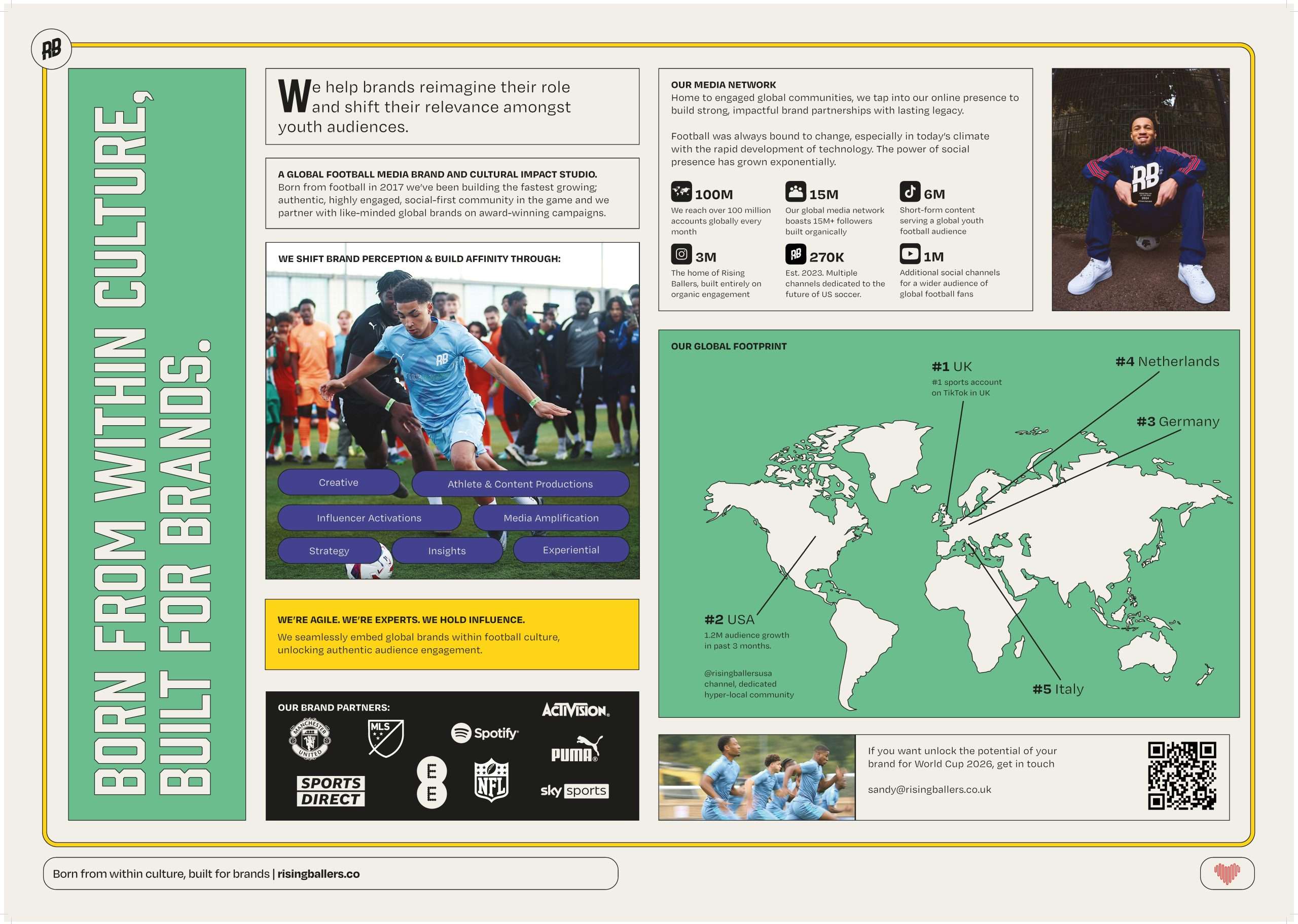
There’s a certain type of World Cup content that always shows up a year or two out. Format changes, revenue projections, broadcast reach – the usual markers of scale.
What Rising Ballers Presents: World Cup Heartbeats does is step away from that surface layer and focus on something more telling: how people are actually going to experience the tournament. Not in theory, but in practice.
And the gap between that reality and how much of the industry is still planning for 2026 is wider than it probably should be.

 Rising Ballers, World Cup Heartbeats report – email sandy@risingballers.co.uk to request a copy.
Fandom isn’t fixed anymore
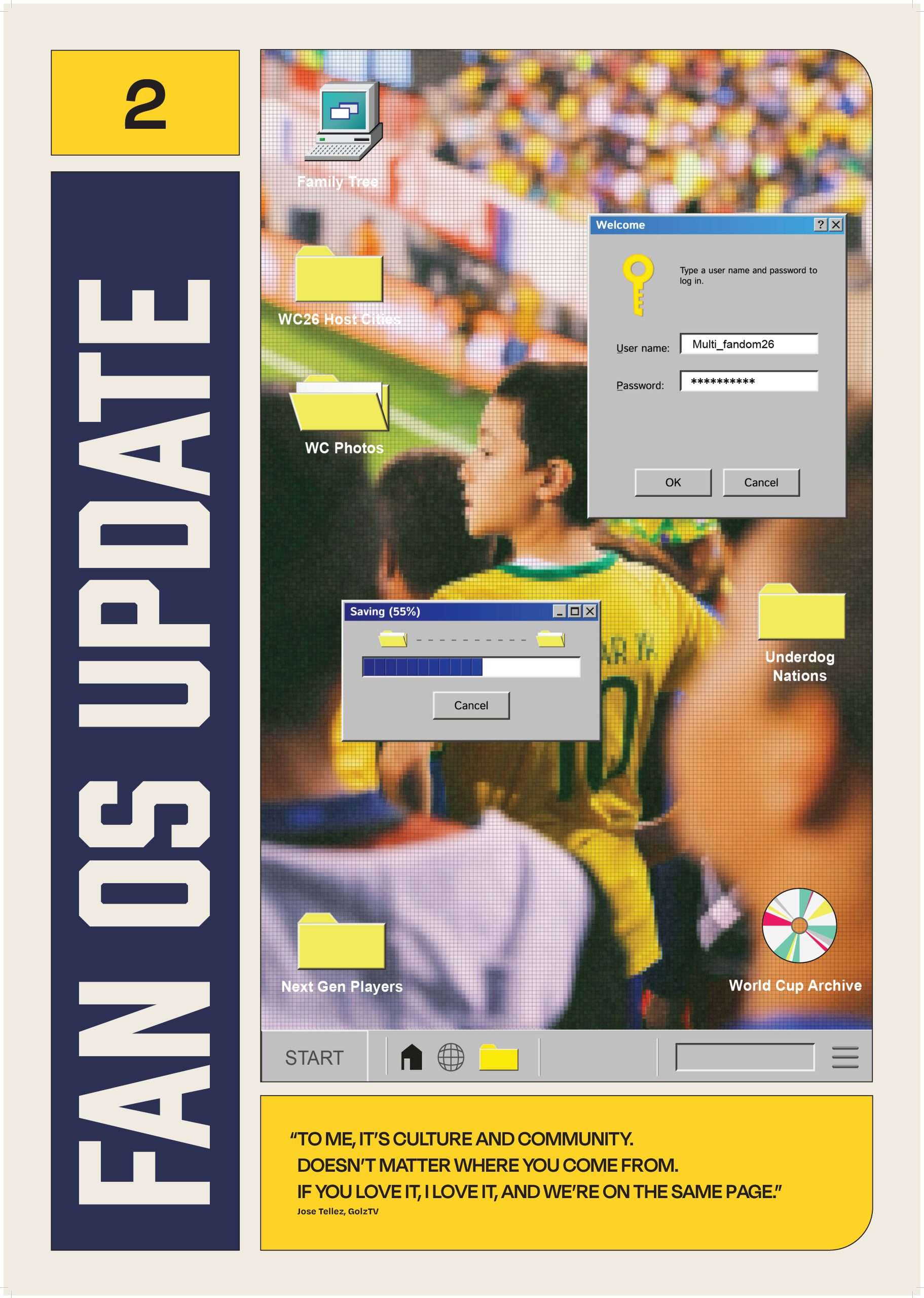
The simplest place to start is with the fan, because that’s where the biggest shift has already happened.
The idea of a singular identity – one team, one perspective, one way of watching – is starting to fall away, and the report puts a number on it: 62% of supporters follow more than one national team. That’s not a marginal change; it’s a gamechanger.
Allegiance now moves between heritage, favourite players, where someone lives, and even who happens to be resonating in the moment. Supporting multiple teams isn’t seen as disloyal; it reflects how identity itself has become more fluid.
The challenge is that much of the industry still builds around static audiences – England fans, Brazil fans, Argentina fans – neat segments that don’t quite exist in the same way anymore. The 2026 World Cup will be experienced through overlapping identities rather than fixed ones, which has a direct impact on how stories travel, how content lands, and where brands can credibly fit.
The match is no longer the centre of gravity
Where that experience happens has shifted just as significantly. For years, second screening was the dominant idea. Now, even that feels outdated.
What the report points to is something closer to constant switching, where the match, the reaction, the commentary and the surrounding culture all sit across different platforms at once.
The live broadcast still matters, but it no longer holds the same central position. Fans move between TV, social clips, group chats and creator content without really distinguishing between them, and in some cases will follow entire matches through feeds rather than full broadcasts.
This isn’t a sign of disengagement. It’s a reflection of how the experience has been rebuilt around speed, access and shareability. Attention is no longer owned in one place; it’s distributed, picked up and dropped in fragments.
Creators are shaping the tournament, not just covering it
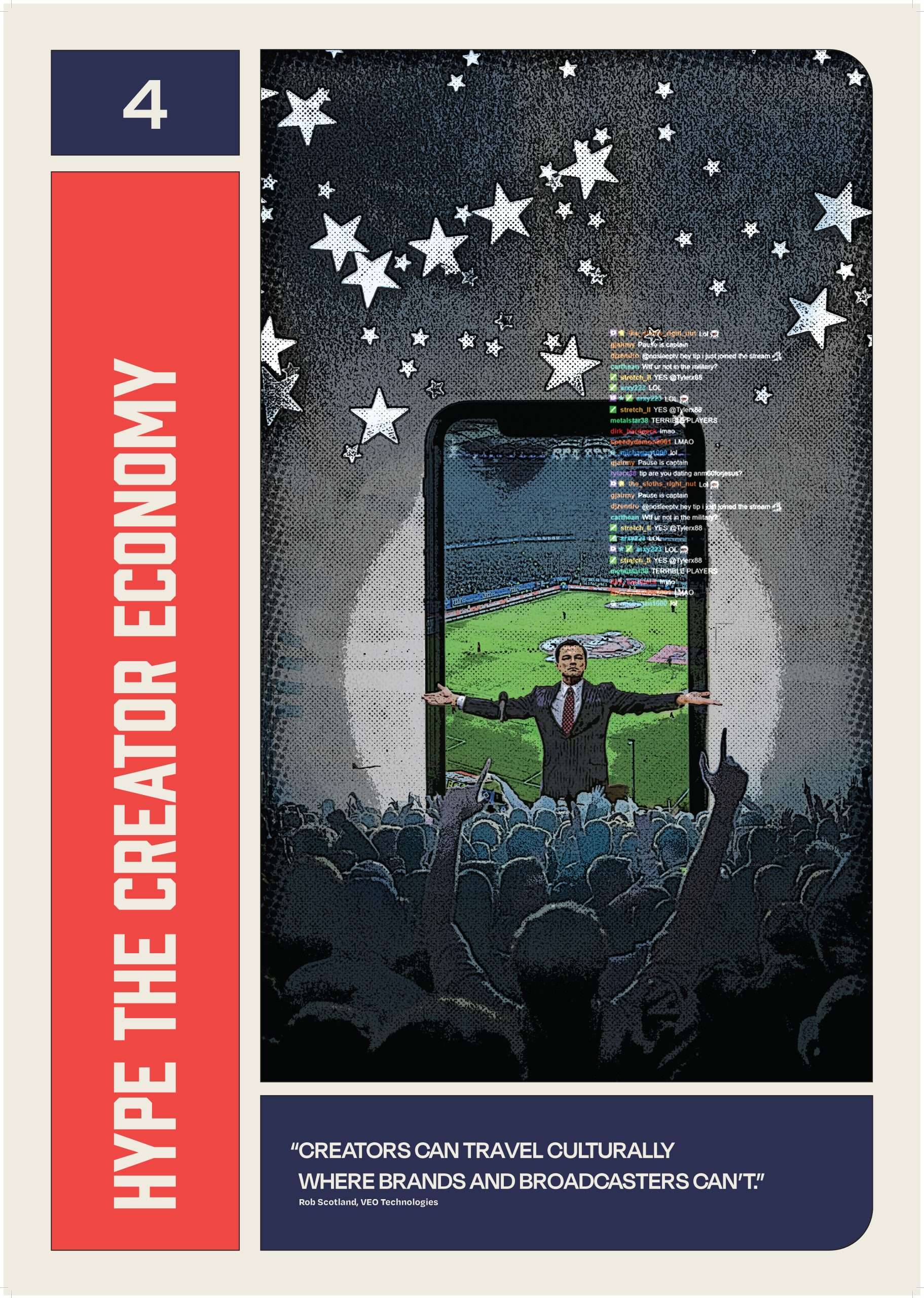
That fragmentation leads directly to the growing influence of creators.There is still a tendency to treat creators as an extension of distribution, another channel through which a message can be pushed.
The report suggests something quite different. The 2026 World Cup won’t just be documented by creators; it will be shaped by them.
Content creators will define how host cities are experienced, which moments carry beyond the final whistle, and how the broader narrative of the tournament is constructed. Crucially, they operate in spaces that brands and broadcasters can’t fully control.
That creates a tension around control and authenticity. Fans are increasingly adept at recognising when a partnership feels forced rather than natural, and the difference between the two is often what determines whether content resonates or is ignored.
Most brands will still try to manage that too tightly. The ones that are prepared to relinquish some control, and allow creators to operate in their own voice, are more likely to align with how the conversation actually unfolds.
Culture is no longer around football. It’s part of it
Overlaying all of this is a broader cultural shift in how the tournament itself is framed.
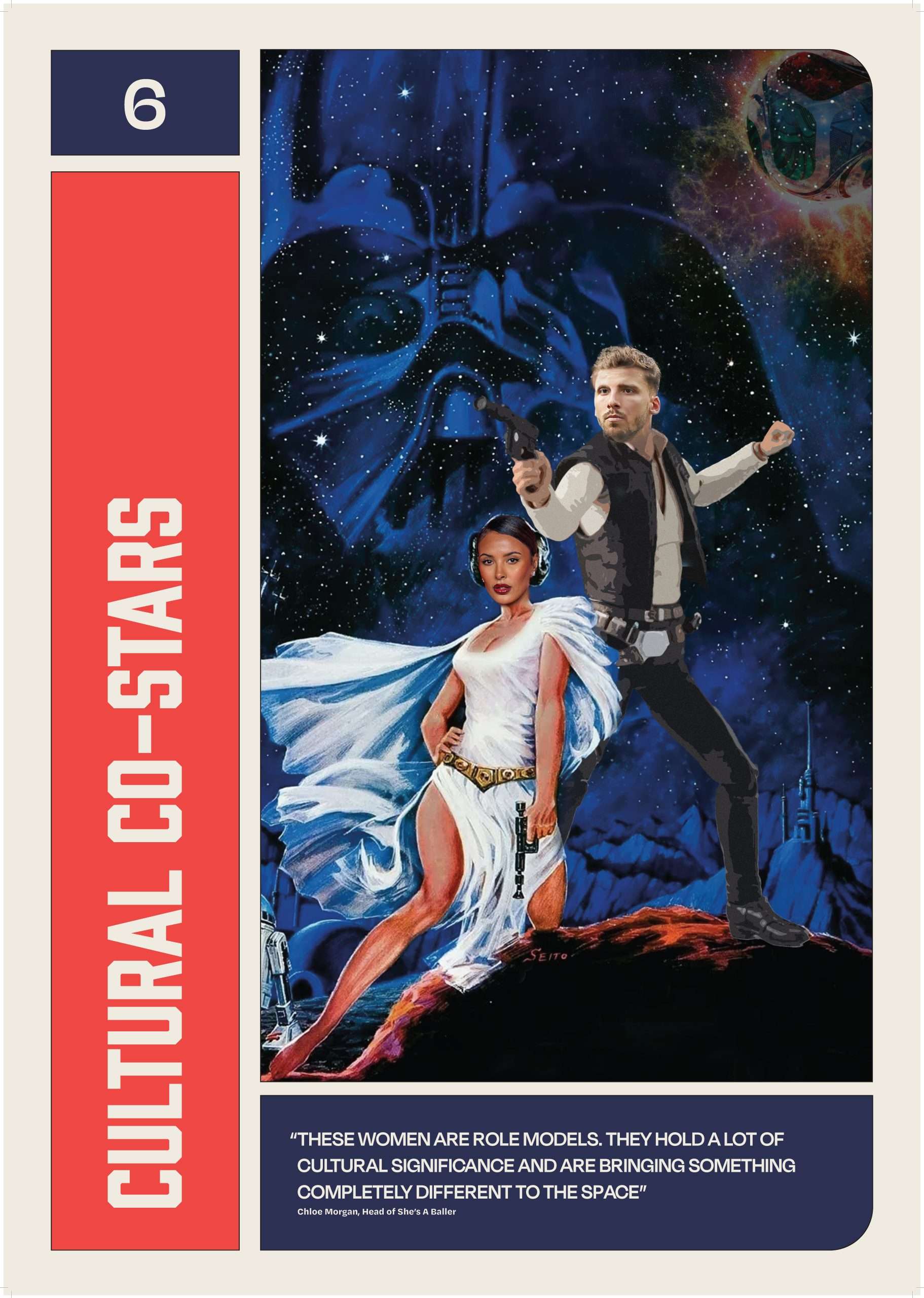
The 2026 World Cup, staged across the United States, Canada and Mexico, is set to blur the lines between sport and entertainment in a way that feels more pronounced than previous editions. Celebrity, music, fashion and internet culture are no longer peripheral elements; they are embedded within the experience.
The report highlights the extent to which this crossover now shapes audience interest. For some, that will feel like a departure from what the World Cup has traditionally represented. For others, it reflects how football already exists within a wider cultural ecosystem.
For brands, it introduces a more complex balancing act. Lean too far into entertainment and credibility can slip; remain too rooted in tradition and relevance becomes harder to maintain. Navigating that space requires a clearer understanding of culture, rather than simply reacting to it.

More isn’t always better
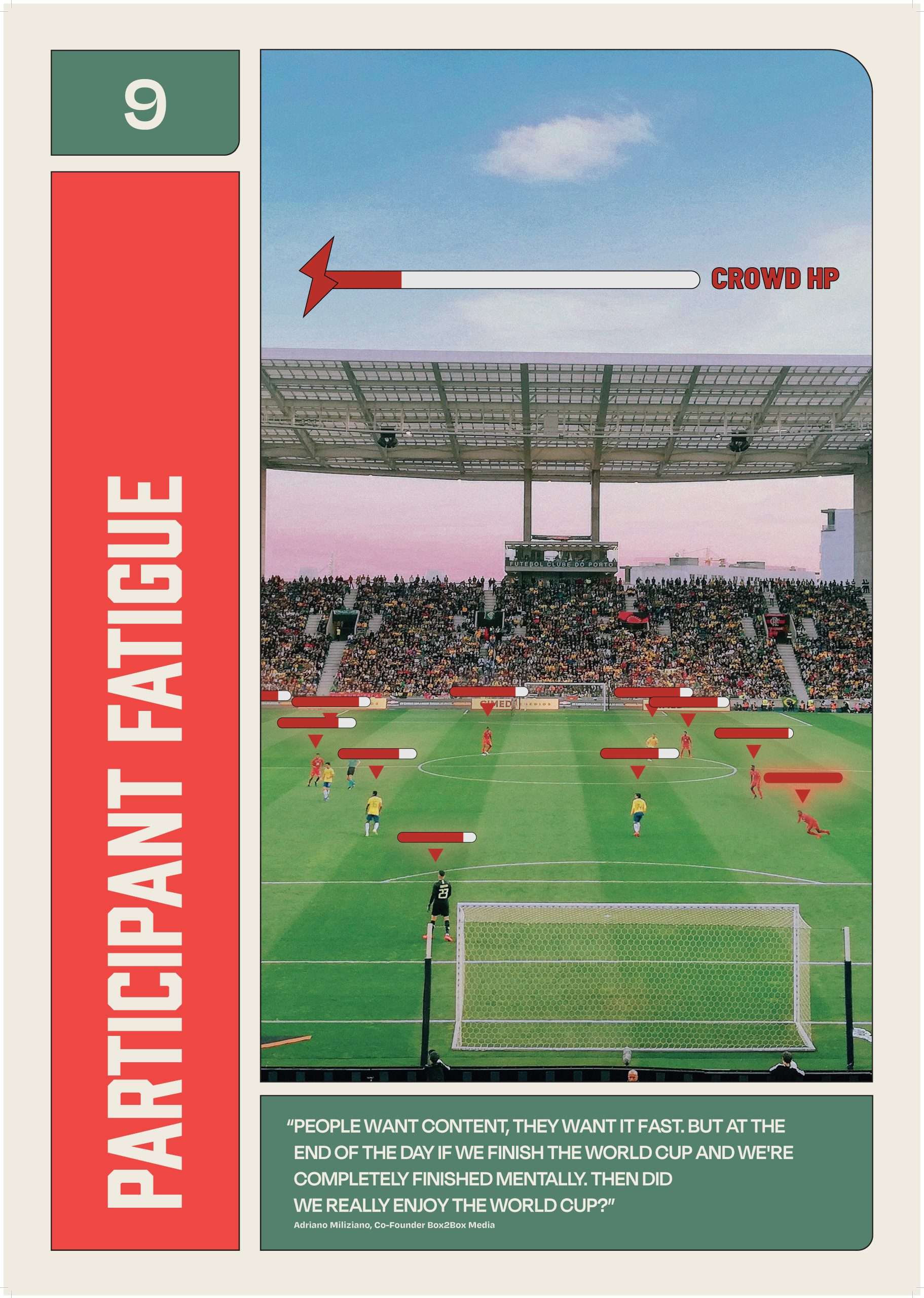
One of the more understated themes running through the report is fatigue. Not just player fatigue, but what it describes more broadly as participant fatigue.
More teams, more matches, more content and more noise create an environment where attention is constantly being pulled in different directions.
There is a natural assumption that more opportunity leads to more engagement, but there is also a tipping point where volume starts to dilute impact rather than enhance it. The 2026 World Cup will likely test that balance.
Within that, there is space for a different kind of storytelling – one that focuses less on constant output and more on depth, perspective and the human side of the game.
In a tournament defined by scale, that kind of restraint may prove to be more distinctive than simply adding to the volume.
AI will accelerate things – but it won’t replace trust
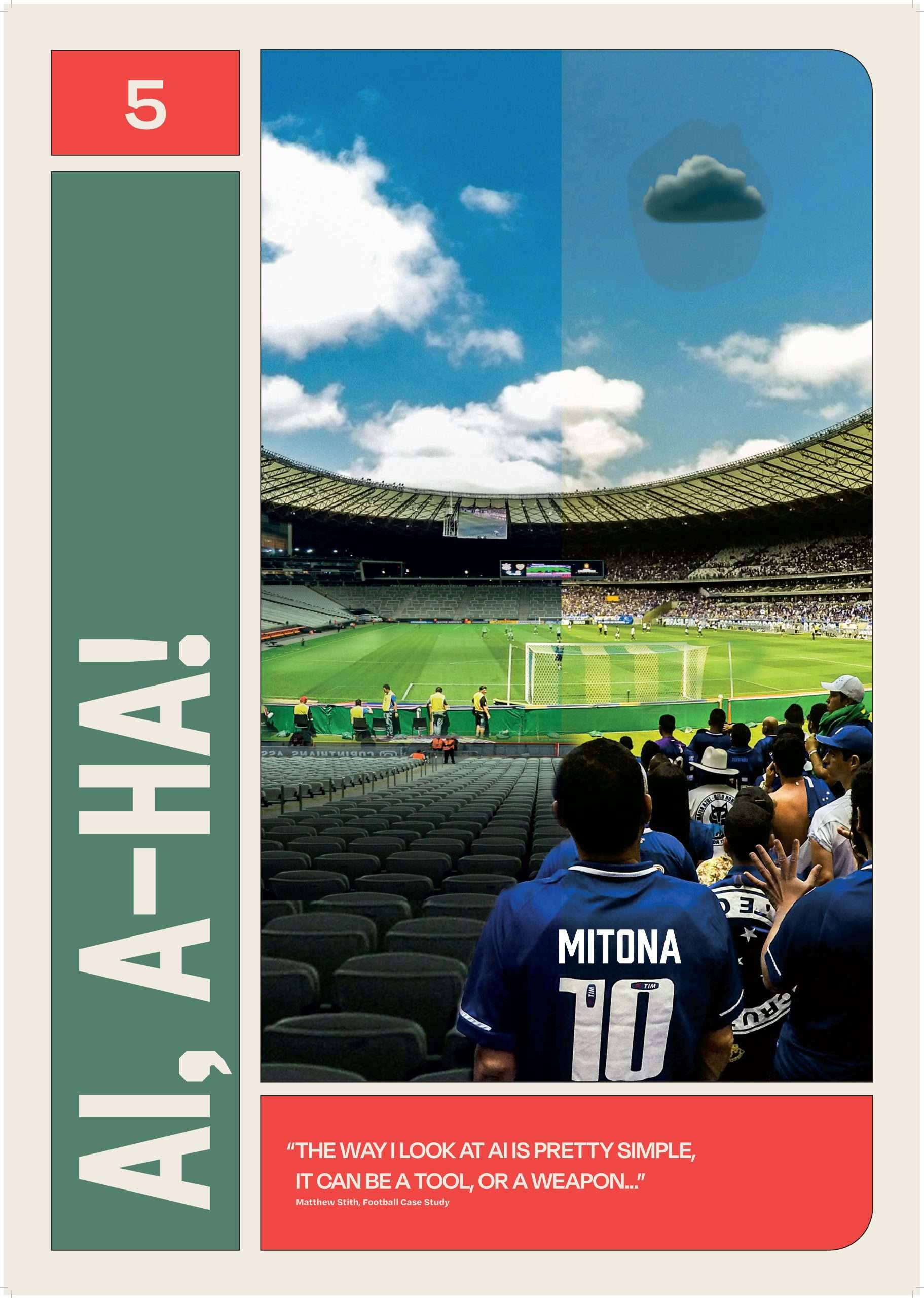
AI will inevitably play a role in how the tournament is experienced, particularly in the speed and volume of content being produced.
The report, however, points to a fairly measured response from fans. There is an appetite for AI when it improves utility – faster highlights, easier access, more personalised feeds – but less enthusiasm when it attempts to replicate or replace human storytelling.
This is already playing out across social media, where clubs publishing AI-generated graphics are often met with immediate pushback.
That distinction is important. While the technology will continue to develop, trust remains tied to human perspective, context and emotion. Brands that lean too heavily into AI-generated storytelling risk creating content that feels efficient but ultimately forgettable.
Those that use it more subtly, as an enabler rather than a centrepiece, are likely to land more effectively.
This is an ecosystem now, not a moment
Taken together, these shifts point to a broader change in how the World Cup functions.
It is no longer simply a moment that brands activate around. It is an ecosystem that they need to operate within.
That requires a different approach: less reliance on short-term campaign bursts, and more emphasis on sustained, culturally aware presence. It means working with creators as collaborators rather than channels, and understanding fandom as something layered and dynamic rather than fixed.
Much of the industry will only partially adjust. At this scale, it rarely moves as quickly as the audience does.
Final thought
The 2026 World Cup will be the biggest in the tournament’s history – but scale is only part of the story.
More significantly, it will be the first World Cup shaped entirely by a generation that consumes sport differently, engages with it across multiple platforms, and expects it to sit naturally within a broader cultural landscape.
That is the shift the World Cup Heartbeats report captures. Everything else is just the context it happens within.
Rising Ballers’ World Cup Heartbeats report is one of the clearest snapshots yet of how the 2026 World Cup is set to be experienced differently – across fandom, creators, culture and consumption. Request a copy by emailing sandy@risingballers.co.uk.